
Not everyone processes by talking in a straight line.

Sandtray Therapy in Angola, Indiana
Some experiences live outside of words.
Sandtray therapy is a powerful, body-based, nonverbal approach that allows your inner world to take shape—literally—right in front of you. Using a wide variety of symbolic miniatures and a tray of sand, you create a scene that reflects what’s happening beneath the surface. No storytelling required. No pressure to explain it “correctly.”
What emerges is a 3-dimensional snapshot of your nervous system at work.
Instead of talking about what happened, you can see it, feel it, and gently interact with it—at a pace your body can tolerate. This is especially important when experiences are stored in the right brain, where trauma often lives before language ever existed.
Sandtray isn’t about play. It’s about process.
For adults, sandtray therapy can unlock material that traditional talk therapy simply can’t reach—particularly with developmental trauma, early attachment wounds, or experiences that feel confusing, fragmented, or overwhelming to put into words.
Jessica uses sandtray as a tactile, holistic, and deeply regulating method to support trauma reprocessing. The tray becomes a contained space where your system can organize, externalize, and begin to resolve what it’s been holding—without forcing insight or reliving distress.
Sandtray therapy may be a great fit if:
Your trauma occurred before you had words for it
Talking about the problem feels overwhelming, confusing, or shuts you down
You respond well to hands-on, grounding, sensory-based approaches
You want more control and safety around how material is explored
You’ve “talked it to death,” but nothing has actually shifted
If your body knows there’s more to the story—but your words keep falling short—sandtray therapy offers another way in.
A quieter one. A safer one. And often, a more effective one.
Sandtray Within an EMDR Therapy Intensive
Sandtray work may also be incorporated into an EMDR therapy intensive when it is clinically appropriate and aligned with your goals. In this format, sandtray can support preparation, parts work, nervous system regulation, imagery, meaning-making, and integration before or after EMDR processing.
This can be especially helpful for clients who process visually, symbolically, somatically, or intuitively. Sandtray offers a way to externalize what may be difficult to put into words, allowing patterns, parts, memories, emotions, and inner conflicts to become more visible and workable.
For clients seeking more concentrated work, sandtray can be woven into a 1–3 day EMDR therapy intensive in downtown Angola, Indiana.
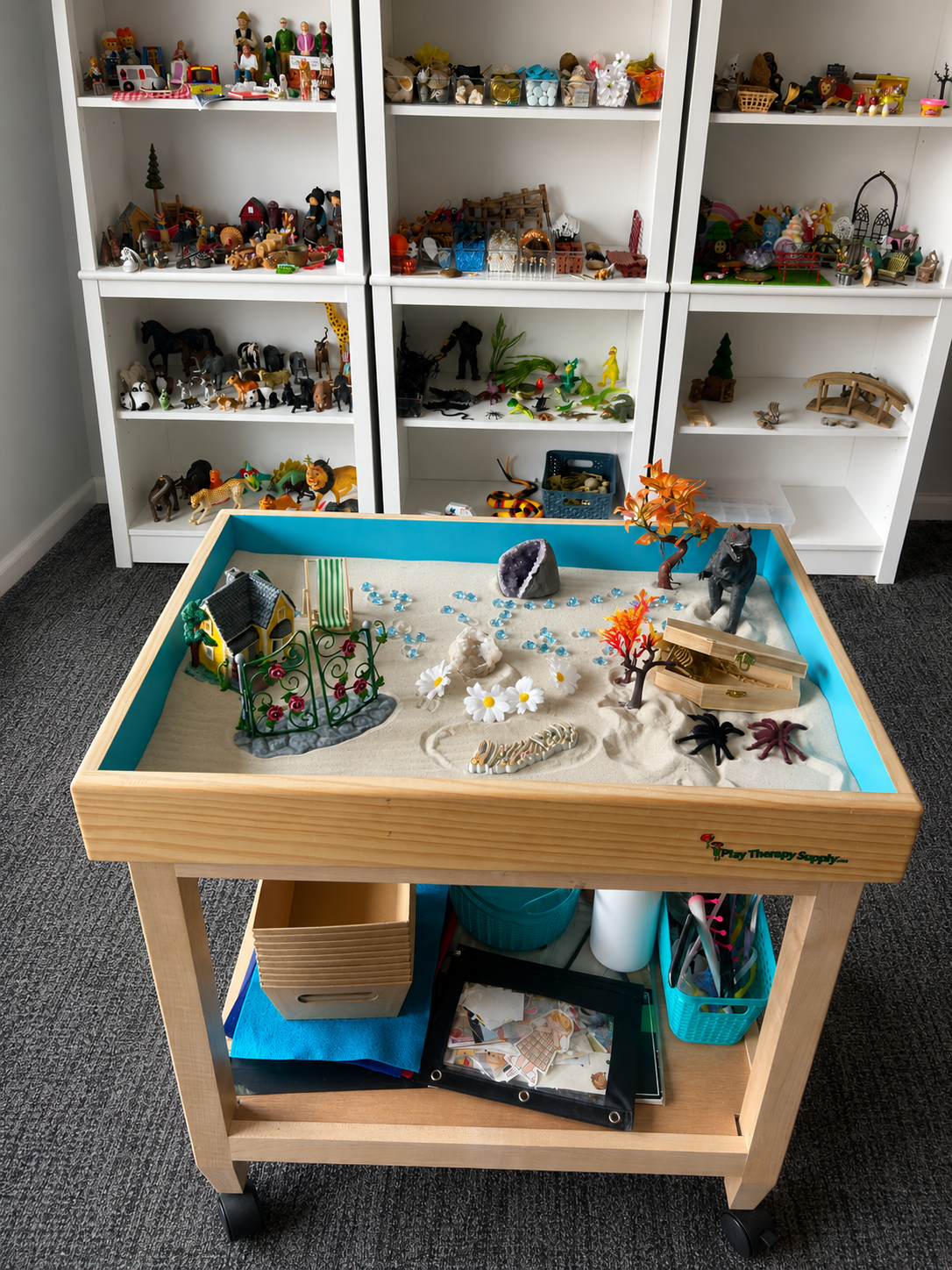
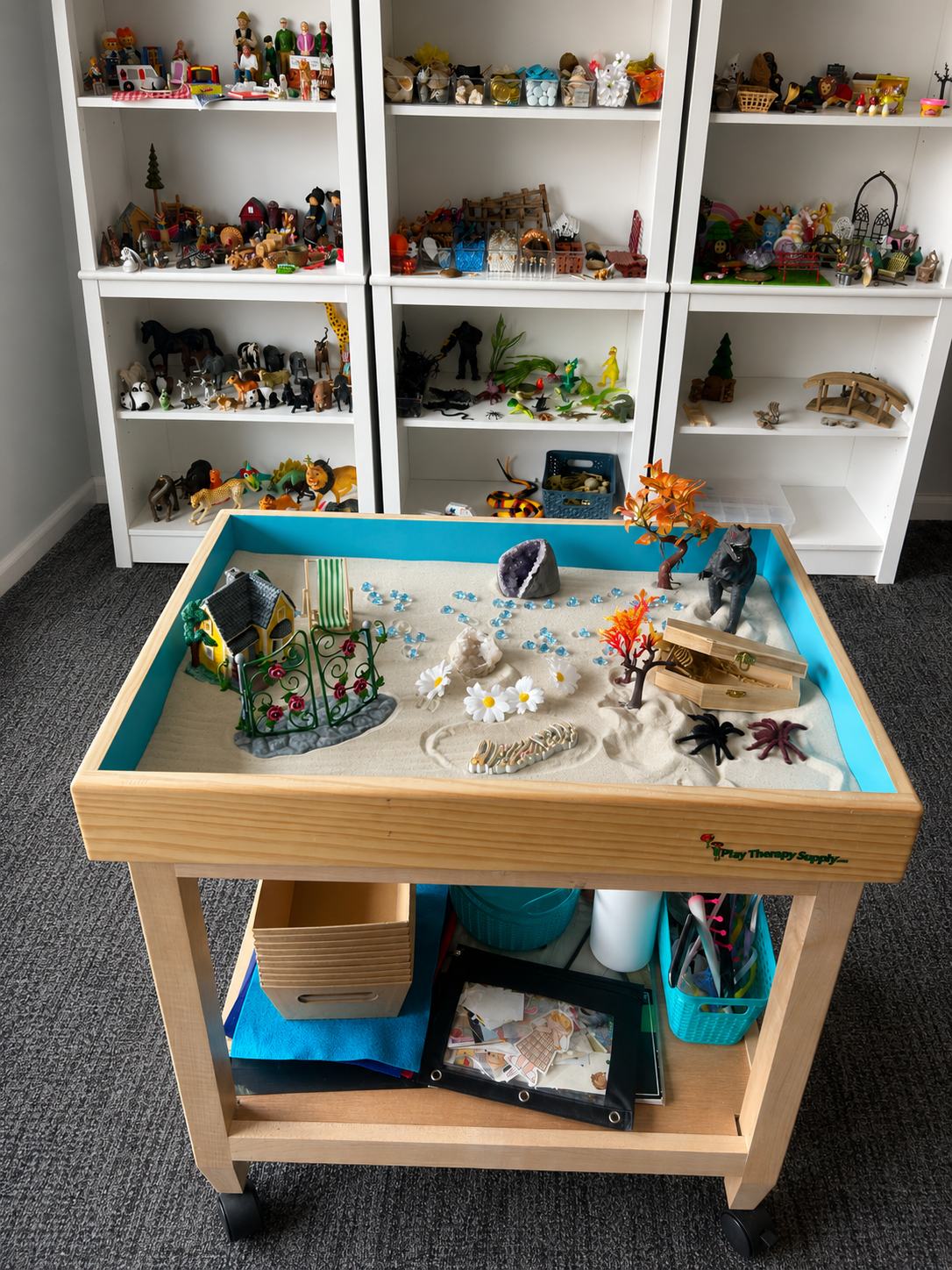
Sandtray Therapy in Angola, Indiana
Mindbody Counseling & Wellness Center offers sandtray therapy in charming downtown Angola, Indiana for adults & adolescents seeking a more visual, symbolic, body-aware, and experiential approach to deeper therapeutic work.
Sandtray therapy can be especially helpful when thoughts, emotions, memories, parts, or inner conflicts are difficult to put into words. It may support trauma processing, nervous system regulation, meaning-making, integration, and a deeper understanding of what is happening beneath the surface.
For clients looking for sandtray therapy, trauma-informed counseling, EMDR therapy, or mind-body therapy in Angola, Steuben County, Northeast Indiana, or the surrounding region, the first step is to schedule a consultation.