
When insight alone hasn’t been enough, there may be a better way.
You have already done the work.
You understand exactly where your patterns came from.
You have read the books, done the therapy, explored your nervous system, your spirituality, your relationships, or the beliefs that have shaped your life.
And still, some pesky part of you keeps reacting as though the old story is happening now.
That’s because understanding the pattern and changing the pattern are not always the same thing.
Sometimes this problem becomes the most obvious when you are trying to build something bigger — building a new business or expanding an old one, finding a new relationship, a more creative life, stepping into a new identity, or creating a life that actually fits more of you.
You know where you want to go.
And yet something inside keeps pulling the emergency brake.
You can understand it. Analyze it. Talk about it. Work around it.
And still feel it show up in your body, your relationships, your decisions, or the life you are trying to create.
Sometimes there comes a point when another 50-minute therapy session simply does not feel like enough room for the change you are trying to make.
I have seen this happen again and again.
And it is why I structure my therapeutic work differently.

I work with people who:
think deeply, feel deeply, and have already done a lot of inner work.
Focused therapy intensives
for people who are ready to give themselves the
time, attention, and space
to work deeply toward a specific change.

This may be for you if…
You are not looking for therapy because you have never reflected on yourself.
You are looking because there is something specific you are ready to stop carrying, repeating, avoiding, shrinking around, or organizing your life around.
Maybe:
you are building something new and an old pattern keeps getting activated
you are tired of losing momentum every time fear, overwhelm, or self-doubt shows up
you keep hitting the same internal wall, even though you know better intellectually
you want to work on one particular issue with more depth and continuity than a weekly hour allows
you are ready to make space for focused work instead of fitting it into the margins of your life
you do not necessarily need more therapy — you may need a bigger box for the work you’re doing
A therapy intensive is not automatically the right next step for everyone.
There may be something else that needs to happen first.
That is why I assess first.
You may especially feel at home here if…
You are creative, entrepreneurial, neurodivergent, spiritually curious — or simply someone whose brain has never been especially interested in painting inside the lines.
You may be someone who:
has ten ideas at once and occasionally three lives happening in parallel
is building a business, a body of work, a new identity, or a life that feels increasingly like your own
sees patterns, symbols, connections, possibilities, and meaning that other people sometimes miss
can be wildly capable in one part of your life and completely stuck in another
has learned to work around your nervous system so well that other people may not realize how much effort it takes
wants therapy that can keep up with the complexity of how you actually think, feel, create, and live
You do not need to become less intense, less creative, less spiritual, less ambitious, or less yourself.
The work is about identifying and changing what keeps getting in the way of where you are trying to go.

Hi, I’m Jessica.
I’m a therapist, entrepreneur, songwriter, lifelong pattern-noticer, and someone who has always been fascinated by what is happening underneath the obvious story.
That curiosity — which, in all honestly, has gotten me in trouble a time or two — is a large part of how I became the therapist I am.
My clinical work centers around trauma, EMDR, mindbody approaches, parts work, and hypnosis. But underneath the techniques, I think my real work is understanding the pattern underneath the pattern — and creating enough time and space to actually work with what we find.
I am not especially interested in forcing people into standardized treatment formulas.
I want to understand your nervous system in its entirety:
- what happened to you
- what didn’t happen to you, that probably should have
- what your brain and body learned from that
- what still gets activated in your brain and body
- what you’ve already tried that actually helped
- what you’ve tried before that didn’t help in the least
- and what specific brain-based patterns need more focused attention
I am also deeply interested in the places where therapy overlaps with spirituality, consciousness, creativity, identity, and becoming.
If you are someone who thinks about meaning, energy, symbolism, intuition, purpose, or the life you are trying to create, you do not have to leave those parts of yourself outside the therapy room.
You also do not have to translate them into clinical language before we can talk about them.
Outside the therapy room, I spend time with my entrepreneur husband, three young-adult children, make things, and deeply absorb myself into whatever has captured me.
I also spend an absolutely unreasonable amount of time tracing ideas until I can see how the pieces fit together, which is the same instinct I bring into my people-work.
You are not coming to Angola to sit across from a blank clinical screen.
You are coming to work with a person who will listen closely, think deeply, ask questions, notice patterns, and help you move through whatever is blocked.
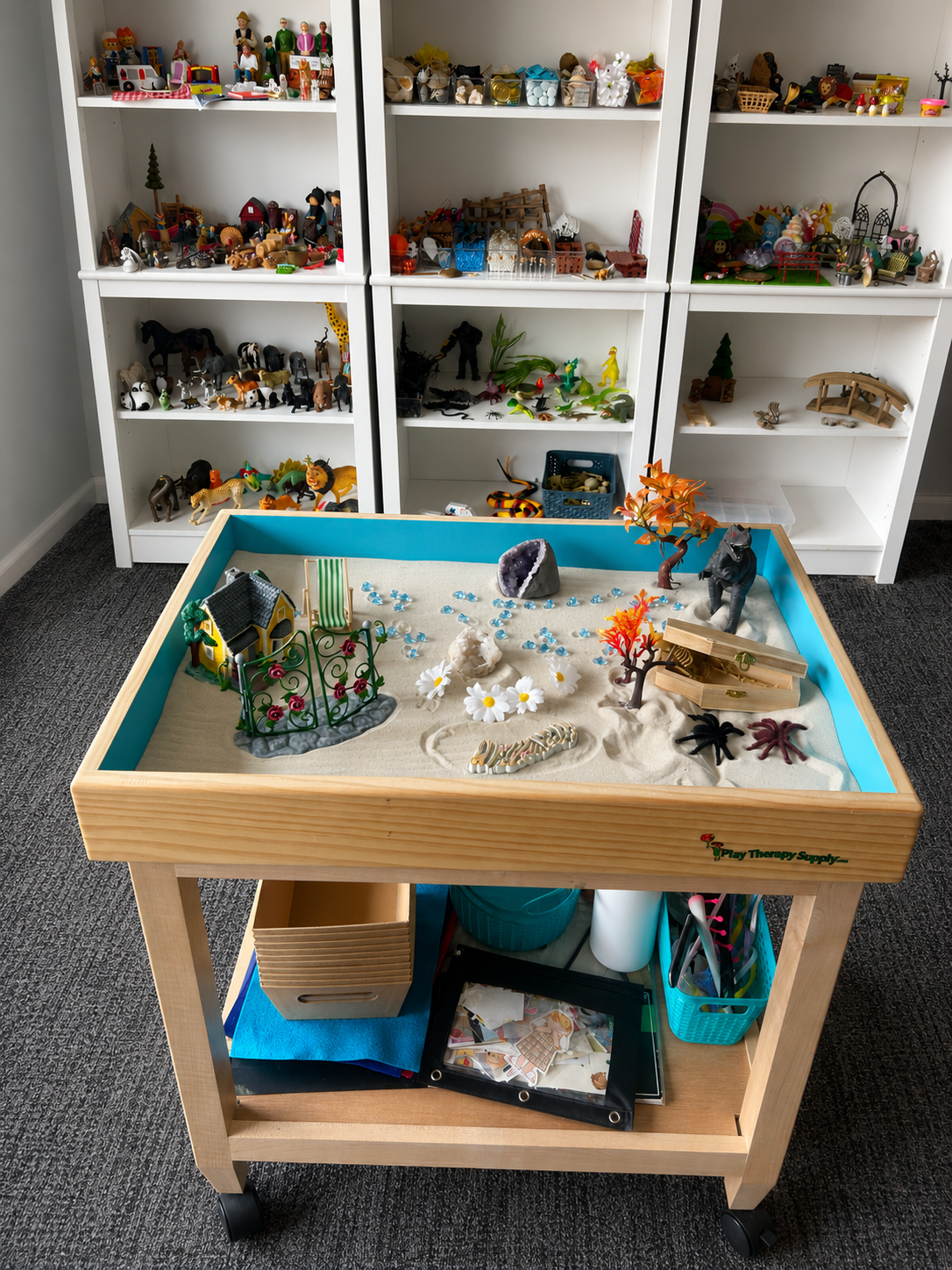
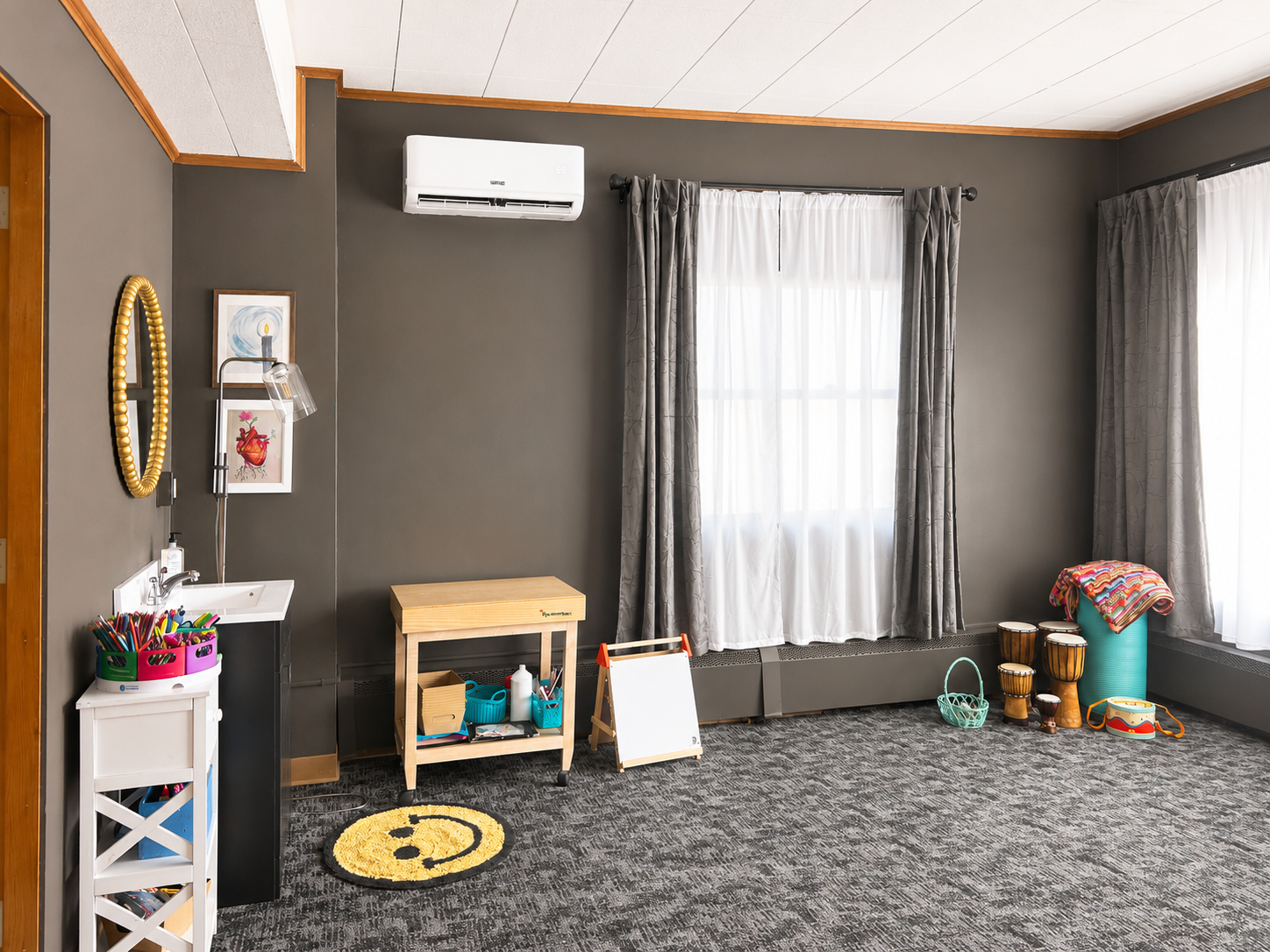
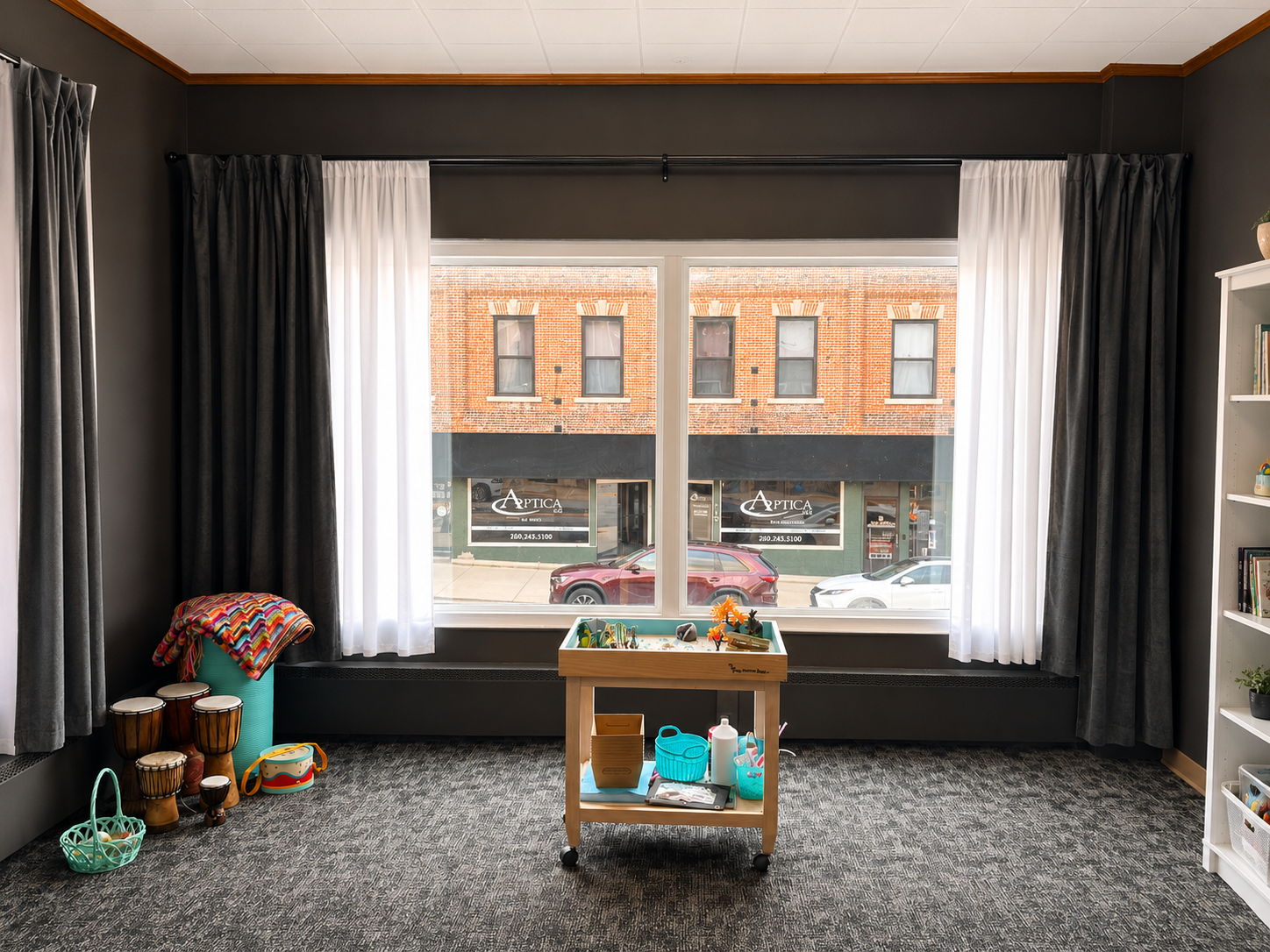
Sometimes I use eye movements (EMDR), sometimes tapping, sometimes deeper somatic movement, Jungian symbolism in the sand, and sometimes beating on a drum, but I ALWAYS start with a thorough assessment of the problem, so we know exactly what we are working on and toward.
Jessica Witmer, MA, MS.Ed., CHt, LMHC
EMDRIA Certified EMDR Therapist

HOW AN EMDR THERAPY INTENSIVE WORKS
The work starts before the intensive does.
STEP 1: COMPLIMENTARY CONSULTATION
The first step is a brief consultation.
We will talk about what is bringing you to therapy, what you hope to accomplish, and whether I reasonably believe an intensive format could be appropriate for you.
I can answer your questions and help you determine whether completing the Comprehensive Assessment makes sense as your next step.
If, after our consultation call, I believe an intensive may be a good fit, the next step is a separate 3-hour Comprehensive Assessment before your intensive is scheduled.
STEP 2: COMPREHENSIVE INTENSIVE ASSESSMENT & MAPPING SESSION
Every intensive begins with a 3-hour Comprehensive Assessment — $600.
This is a separate clinical service completed before any intensive is scheduled. When I am legally authorized to provide telehealth in the state where you are physically located, the Comprehensive Assessment may be completed virtually. If an intensive is recommended, you will then travel to Angola for the focused in-person work.
You do not need to arrive already knowing whether you need one intensive day, two days, or three. That is part of what the assessment is for.
First, you will complete detailed intake material beforehand so that our time together can be used well. Then, before we meet, I will carefully review and synthesize the information you provide, beginning to build a map of what may be contributing to the problem.
During the 3-hour assessment, we will deepen and refine that map by looking closely at the patterns that appear to be maintaining the problem, including relevant:
memories
beliefs
triggers
emotional responses
body responses
coping strategies
strengths
existing resources
The goal is not simply to collect your history.
It is to build a map of what we are actually working with.
By the end of that session, I will have a much clearer clinical picture of what may be maintaining the problem, what appears ready for deeper processing, and where additional preparation may be needed.
From there, I make a clinical recommendation about how your intensive should be structured.
For some clients, that may mean moving fairly quickly into focused processing work. For others, especially when the history is more complex, part of the intensive may involve preparation, stabilization, resourcing, or strengthening internal capacity before deeper processing begins.
The goal is not to fit you into a predetermined intensive format. It is to determine what kind of work is actually appropriate for you.
Because the initial consultation call is designed to screen for overall fit before you invest in the assessment, by the time we reach this stage I will already reasonably believe that an intensive format may be appropriate for you.
The assessment allows me to build the work around you—rather than placing you into a predetermined protocol or expecting you to arrive fully prepared for deep processing.
STEP 3: CLINICAL RECOMMENDATION
After the assessment, I will tell you what I recommend.
That may be:
a one-day intensive
a two-day intensive
a three-day intensive
additional preparation first
continued outpatient treatment
or another approach entirely
STEP 4: SCHEDULE YOUR INTENSIVE DAY OR DAYS
If intensive work is recommended, we will create a plan based on the clinical picture rather than asking you to select a package from a menu.
In the uncommon situation where I determine that an intensive format is not clinically appropriate, I will explain why and recommend a different path. Either way, after your assessment, both you and I will have much greater clarity around the problem.

WHAT AN EMDR INTENSIVE ACTUALLY LOOKS LIKE
Intensive days start at 9:00 a.m. and we typically end around 4:30–5:00 p.m.
We take a lunch break, but not at an arbitrary time. We stop when we reach a natural place in your processing, then give your brain and body time to eat, move, rest, and reset before continuing.
The day will likely include EMDR eye movements, because EMDR is my specialty, but also may include hypnosis, Jungian sandtray work, somatic work, parts work, breathwork, imagery, grounding, or bilateral stimulation using rhythm or drums.
The goal is to give both the brain and the body enough time and movement to process through what has been stuck.
We pace the day according to what is actually happening — continuing when there is useful momentum, slowing down when needed, and making sure there is time at the end to settle, orient, and integrate before you leave.
There is no promise that one day changes everything. But there is value in finally giving something your full attention.
WHY TRAVEL TO ANGOLA FOR AN EMDR THERAPY INTENSIVE?
For people who are usually juggling ideas, projects, people, responsibilities, and ten tabs open in their brain, stepping away from normal life can be part of what makes the work possible.
You leave your ordinary environment.
You make the drive.
You arrive for one specific reason.
Your calendar is cleared. Your phone is off.
There is nowhere else you are supposed to be for the next several hours.
You are not trying to squeeze therapy between work, errands, school pickup, meetings, or everything else competing for your attention.
You have intentionally made space for the work.
The travel by itself is not treatment.
But stepping outside of ordinary daily routines can create a very different kind of space for doing treatment.
You come to Angola because you have decided that this deserves more than whatever time happens to be left over.

Sometimes change begins with deciding to give something more space than you have given it before.
Sometimes change begins with deciding to give something more space than you have given it before.
Intensive Fees
3-Hour Comprehensive Intensive Assessment & Mapping Session — $600.00
1-Day Intensive — $1,000
2-Day Intensive — $2,000
3-Day Intensive — $3,000
Each format includes extended, protected time for focused clinical work, with breaks, pacing, and integration built in intentionally.
FAQs
Can I keep my current therapist?
1
Yes. In fact, many clients come for an intensive while continuing to work with their regular therapist before and after.
I am not trying to replace a good ongoing therapeutic relationship. When appropriate and with your permission, I can coordinate with your therapist so the intensive fits into the larger work you are already doing.
Can the Comprehensive Assessment be done virtually?
2
In many cases, yes.
If I am legally authorized to provide telehealth where you are physically located, the 3-hour Comprehensive Assessment may be completed virtually. The intensive itself takes place in person in Angola, Indiana.
What if you decide an intensive is not the right fit for me?
3
Then I will tell you.
The assessment is designed to help us understand what is actually going on and what kind of work appears most appropriate. If I believe another approach, more preparation, or continued outpatient therapy would serve you better, I will explain why and make that recommendation. Often, I may still recommend an intensive, but with a greater emphasis on preparation, stabilization, or resourcing rather than immediate trauma processing. If I believe an intensive format itself is not clinically appropriate, I will tell you that and recommend a different path.
Do I need to know how many intensive days I need before I contact you?
4
No. You do not need to decide whether you need one day, two days, or three. That is part of what the assessment is for.
If intensive work is appropriate, I will make a clinical recommendation based on what we identify together.
Do you take insurance?
5
No. My practice is private pay.
The Comprehensive Assessment is $600.
Intensive fees are:
1-Day Intensive — $1,000
2-Day Intensive — $2,000
3-Day Intensive — $3,000
The first step is a complimentary consultation so we can talk briefly about what you are hoping to work on and whether this format may be worth exploring.
You do not have to know yet whether an intensive is right for you!
That is what the first conversation — and, when appropriate, the assessment — are for.
If you have reached the point where you understand the problem but something still has not shifted, we can start by talking about what you have tried and what you are hoping could be different. Let’s start the conversation.